
Defining the Radence Standard of Care

Our members are not patients, they are part of the Radence family

June 17, 2025
Doctors working together
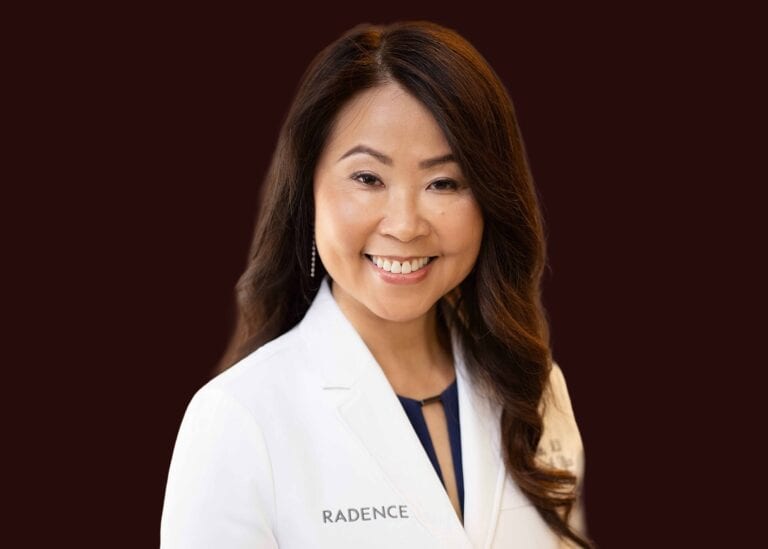
by Julie Chen, MD
Chief Medical Officer, Radence

While the healthcare industry is often crowded with buzzwords, Radence is building something deeper, more rigorous, and far more human. At the heart of Radence’s model is early detection for disease interception and enduring support. The Radence journey is about creating a lifelong process of understanding, protecting, and optimizing the health of our members.

Beyond Access to Precision Care

Precision programs often involve many modalities and a great deal of data. At Radence, the bar is much higher. Our interpretation of precision medicine involves a multimodal approach, innovative tools, and high-quality data to provide actionable insight that can impact our members’ day-to-day quality of life.

The beauty and artisanship of our approach lies in selecting the right tools to get an accurate picture of each individual from their health data and creating a highly personalized action plan tailored to each member. Providing precision data gives our members some control over their health span. It’s a partnership. Radence gives members clear data-driven guidance and recommendations for an optimized pathway to optimal outcomes. What matters most is the quality of what Radence members receive. From the clinical on-science precision of early detection testing to the accuracy of who our members truly are — that is what leads to reproducibility in our interpretations. Our care model is designed for scientific integrity at every level.

Radence’s multimodal, multi-layered approach to early detection triangulates insights across tools, organ systems, and time, she explained. It’s about doing the right tests, not over testing. Quality vs. Quantity. It’s about building a more complete picture of your health and reducing the chance of false positives or false negatives that could lead to either unnecessary panic or missed opportunity.

While there is significant value in having data, there is an intentional approach to why we gather that data and what we do with it. It’s aligned with desired outcomes and personal goals. This is not about gathering random data. The how and the what are based on the why, based on each person’s intentions, goals, and risk factors. That makes it personalized.

We Walk with You

At Radence, we walk with you. We use what we learn to create a mutual understanding of your health at a cellular level.

Health is a moving target. Diseases evolve. Physiology changes. We grow with our members, so we can see how their bodies are evolving, whether they’re moving toward disease or away from it.

This continuous relationship enables Radence to detect small shifts that might otherwise be missed. Our longitudinal approach isn’t just about diagnostics. It’s about building a true health partnership. One that is alert, adaptive, and deeply informed.

The Human Lens

While Radence focuses on science and personalized precision care, what truly guides this innovative model is something deeply human: care as if you’re family.

When I meet one-on-one with our members, I always ask myself: “If this was my parent, my child, my best friend — how would I approach this?”  That’s the lens we bring to every decision. Every clinician at Radence is trained not only in the protocols and tools, but in this philosophy. It’s not enough to be highly skilled. Our providers must be deeply invested. If they’re not doing that, they’re not part of Radence.

The Discipline of Iteration

Medicine moves fast — and Radence does more than keep pace. We lead.

The Radence model is built to never stand still. Whether it’s adding new genes to a genomic panel after just one insight or reevaluating a testing protocol after a single ambiguous case, our clinical team is in constant conversation about continuous improvement.

There is no static. If I don’t like what I’m seeing in a meeting, we iterate. Immediately.

This commitment to refinement is part of what makes Radence unique.

We aren’t simply offering what’s available, we are building what should exist. Every encounter, every report, every protocol is held to a higher standard, constantly evaluated and pressure tested, focused on the drive to be the best and deliver the best. Always.

A Curated Experience Rooted in Science

Consistency is not a luxury. It’s a clinical imperative for Dr. Chen and her team at Radence. From the quality of imaging machines to the communication style of our clinicians, Radence is working to ensure that every touchpoint delivers the same level of excellence.

Whether you’re speaking to a radiologist, internist, or nurse practitioner, you are engaging with one unified standard of care. That level of consistency is rare. And it’s intentional.

Innovative Care, Rooted in Love

Radence is not just a system. It’s a mindset. A culture of care rooted in curiosity, rigor, and love. Our members are not patients, they are part of the Radence family.

To care for someone as if they are family is a high bar.

It means we don’t accept good enough. It means we question everything. And it means that we are always watching, learning, evolving — so that we can see the stumble before it happens. That’s the Radence Standard of Care.
 

The Radence Standard

A different standard than the market is applying - and it will always be the one we hold. If you've been considering membership, we'd welcome the conversation.
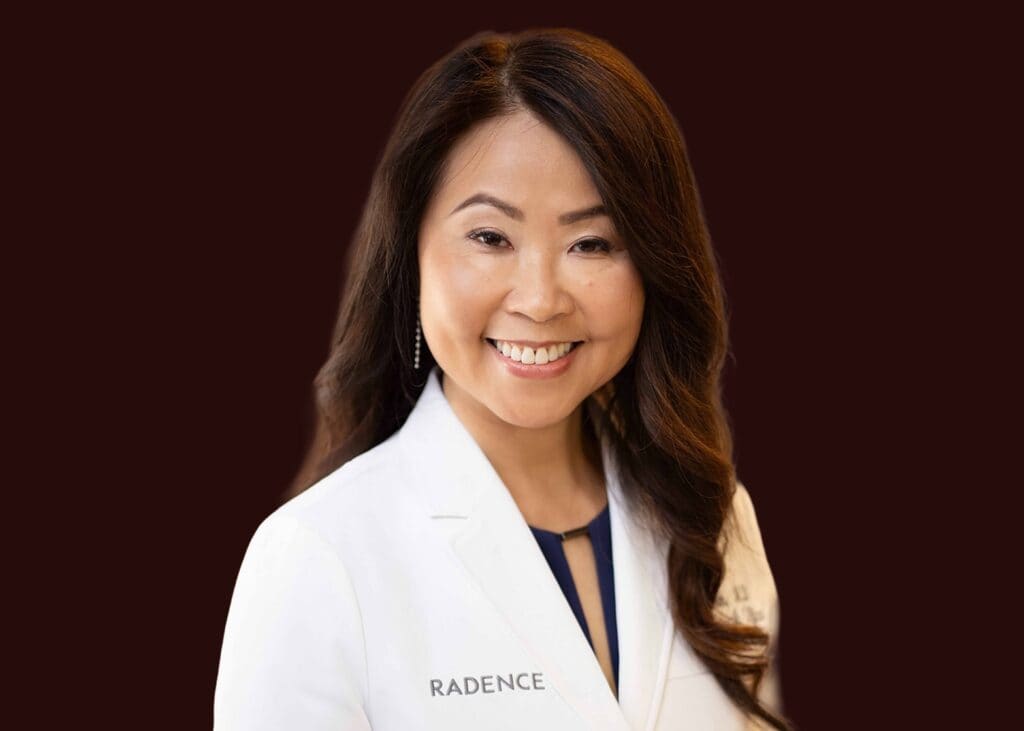
Julie Chen, MD
Chief Medical Officer, Radence
Dr. Julie Chen is the Chief Medical Officer at Radence. She previously served as Chief Medical Officer at companies such as Human Longevity and Vitagene. Her research, at the FDA, NIH, National Cancer Institute, USC, and Mount Sinai, has shaped scientific advancement in precision medicine. As a fellowship-trained integrative internal medicine physician, she developed numerous corporate wellness programs in Silicon Valley focusing on whole-systems approach to healthcare. Dr. Chen is a frequent medical expert on major media outlets, including ABC, NBC, FOX, and MSN, and she has been featured in national magazines and podcasts. In 2023, she was named one of the Top 25 Women Leaders in Biotechnology by Healthcare Technology Report for her leadership in health tech development. Dr. Chen is a member of the Buck Institute's President's Circle, dedicated to advancing research in aging and longevity.

You may be interested in:

Redesigning Medicine from the Inside Out

In today’s rapidly evolving medical landscape, physicians are increasingly called upon to balance innovation with evidence, patient expectations with system constraints, and emerging tools with deeply rooted traditions. For Dr. Julie Chen — a leader in genomic precision medicine, board-certified in internal medicine, and fellowship-trained in integrative medicine — that means reclaiming what medicine was always meant to be: comprehensive, compassionate, and grounded in science.

“We all went into medicine to help people heal,” said Dr. Chen. “But many of us find ourselves navigating systems that are optimized for disease management, not for prevention. That isn’t a personal failing. It’s a systems problem.”

Dr. Chen currently serves as Chief Medical Officer at Radence, a company pioneering a multimodal precision-based model of care. At its core, Radence seeks to identify and intervene on disease risk earlier than traditional models allow — not in response to pathology, but in anticipation of it.

“Most of what we see in chronic disease is not sudden,” Dr. Chen said. “It’s a long, progressive breakdown of physiologic resilience. Our job is to understand that trajectory and to act on it early, when the patient still feels ‘fine,’ but the biology is already shifting.”

Addressing the Limits of Traditional Care

Dr. Chen has tremendous respect for the goals of current conventional medicine. However, she sees it as incomplete.

“Our traditional system is remarkable at acute intervention,” she said. “But it’s less equipped to manage early disease interception of the slow-developing dysfunctions that characterize so many of our biggest health challenges — cancer, cardiovascular disease, neurodegeneration, metabolic dysfunction.”

She points to constraints many physicians know well: 15-minute visits, fragmented specialty care, limited tools for subclinical disease, and a reactive rather than predictive infrastructure.

“It’s not that doctors don’t care about prevention or early detection,” Dr. Chen said. “It’s that the system doesn’t always give them the time or tools to do it well.”

A Multimodal, Systems-Oriented Approach

What Radence offers is a framework to augment what clinicians are already doing. Its platform brings together genomics, imaging, metabolomics, advanced blood work, and wearable data to generate a comprehensive picture of an individual’s health trajectory.

“We use high-resolution tools to pick up signals that traditional workups might miss. But more importantly, we translate those findings into real-world decisions. We help people understand their risk and take steps to modify it,” Dr. Chen said.

That process is deeply collaborative. Radence doesn’t seek to replace a patient’s care team. It works in partnership with referring clinicians, offering extended assessments and evidence-based recommendations that complement existing care plans.

“This is not about displacing primary care or specialists. It’s about supporting them with another layer of data and insight,” Dr. Chen said. “We know that no one understands the patient better than their own doctor. Our role is to enhance that relationship, not compete with it.”

Precision without Elitism

One concern often raised about precision or concierge medicine is equity—that these models only serve the affluent. Dr. Chen sees this differently.

“Early adopters always pave the way for broader access,” Dr. Chen said. “Every major medical advance — from medications to whole-genome sequencing — started in specialized settings before becoming standard. What we’re building now will eventually become more scalable. But someone has to lead, and that’s where Radence comes in.”

To that end, the company is investing in outcomes research, clinical validation, and real-world evidence to support its protocols. “We’re not just innovating,” she said. “We’re validating. We’re contributing to the science so this model can expand.”

Data Alone is Not Enough

Despite Radence’s technological sophistication, Dr. Chen emphasizes that data is only as powerful as the context it’s given.

“We’re not just handing people dashboards,” she said. “We’re walking them through it. We pair high-resolution diagnostics with meaningful conversation. That’s where trust is built. That’s how change happens.”

The result is more than early detection testing. It’s engagement.

“When patients understand their physiology, when they see the why behind a recommendation, they are more likely to act,” Dr. Chen said. “We’re not just changing lab values. We’re changing behavior.”

Four Disease Domains, One Coordinated Strategy

Radence begins by focusing on the survival layer — the four disease categories responsible for the majority of premature mortality and morbidity: cancer, cardiovascular disease, metabolic dysfunction, and neurodegeneration. These are not isolated silos, Dr. Chen noted. They are deeply interconnected through shared pathways of inflammation, oxidative stress, metabolic regulation, and genetic risk.

“If you have insulin resistance, you’re not just at risk for diabetes. You’re at increased risk for dementia and cardiovascular disease,” she said. “We take a systems-level view of risk. That means we can intervene in ways that impact multiple domains simultaneously.”

From there, the platform expands to assess autoimmune risks, hormone regulation, immune function, and more.

“We meet the patient where they are, and then we grow with them,” Dr. Chen said. “It’s dynamic. It’s continuous. And it’s deeply personal.”

An Invitation to the Medical Community

For Dr. Chen, one of the most innovative aspects of Radence is the partnership.

“We want to work with clinicians who are curious, collaborative, and committed to pushing the standard of care forward,” Dr. Chen said. “Whether you’re a cardiologist, internist, neurologist, or family physician, there’s a place for you in this model. We need your insight. Your experience. Your trust.”

She knows that change is never easy, especially in a field as high-stakes and evidence-driven as medicine. But she also knows that physicians are problem-solvers.

“We’re not asking people to abandon conventional care,” Dr. Chen said. “We’re inviting them to build on it. To extend it. To make it better.”

In an era where both patients and clinicians are demanding more — more answers, more support, more continuity, Dr. Chen sees Radence as a blueprint for what’s possible.

“This is the future of care: science-led, system-aware, patient-centered, and clinician-empowering,” Dr. Chen said. “We’re not starting over. We’re starting ahead.”


Screen showing various biological systems

Embracing Early Detection

For many, healthcare begins when something feels wrong — a nagging pain, unusual fatigue, or symptoms that can no longer be ignored. That moment of concern leads to appointments, tests, referrals, and eventually, a diagnosis. By then, the body may have already crossed a threshold. The opportunity for prevention has passed.

We’ve trained ourselves to respond to crisis instead of investing in clarity. But it doesn’t have to be that way.

Today, the landscape of healthcare is shifting. Groundbreaking advancements in science and technology are making it possible to detect risks and uncover disease long before symptoms arise. This is more than just progress. It’s an invitation to take ownership of personal health in a way that is proactive, precise and deeply empowering.

Protect What Matters Most

Conventional healthcare was built to intervene after illness begins. Even individuals with access to premium services often find themselves navigating a fragmented system of multiple specialists, disjointed testing, and a lack of holistic insight to optimize wellness.

What people want isn’t more information. They want precise data-driven actions. They want to trust that they’re seeing the full picture and that nothing important is being missed.

Discerning individuals expect more. There is a desire to understand and protect what matters most before it’s at risk. That’s where comprehensive early detection and prevention enters the conversation.

Empowered by Early Detection

The real power of early detection lies in what it makes visible, revealing the silent chronic illnesses that often progress unnoticed including cancer, cardiovascular, metabolic, and neurological diseases. Radence expertly develops best-in-class proprietary protocols for advanced testing, such as organ-specific MRIs, Whole Genome Sequencing, multi-cancer screening, and advanced cardiac imaging to provide an unprecedented and personalized view into the body’s future risks.

It’s not a contest to see how many biomarkers we can tally. It’s about selecting the right tests, the ones grounded in science, personalized to each member’s ROI, that can reveal meaningful insight we can do something about.

This level of precision allows for focused, evidence-based decisions. It eliminates guesswork and brings clarity.

Access to Actionable Health Insight

When approached with purpose, early detection data is not about overwhelming people with numbers and potentially creating unnecessary anxiety. It’s about providing actionable insights. A well-designed early detection and prevention strategy offers more than information. It delivers confidence. If you have cancer or cardiovascular disease you will know about it one day. The question is do you want to know about it early, when it is highly treatable, or would you rather wait and see if conventional medicine can do something heroic for you. Either way, you will know about it.

Early detection provides the answer. And it does so in a way that allows for data-driven decision making early enough to have an impact on the future. This is an advancement in the past few years that is only just coming to light, one that Radence members can have now and will eventually change the face of medical care for everyone.

A Trusted, Multimodal Approach

Trust is the cornerstone of any healthcare relationship. It is built on integrity. Offering a higher standard of care means consistently aligning science, service, and empathy.

True luxury in healthcare is knowing that your care is grounded in science, delivered with accuracy, and tailored to you as a whole person.

Radence’s multimodal approach integrates precision medicine with thoughtful, personalized guidance in partnership with our members’ trusted physicians and concierge doctors. It ensures that no result is left unexamined, and that each next step is considered with care and in context of one’s personal and family health history and concerns.

The Radence Standard of Care

When precision medicine and advanced early detection meet highly personalized, compassionate care, the result is a healthcare experience rooted in science, wisdom and excellence. This is the Radence Standard of Care: anticipatory, personalized, and scientifically sound.

The future of healthcare is here. And it’s time we hold our health to the same higher standard we hold for every other aspect of our lives. Now is the time to embrace clarity, pursue insight, and choose prevention. Because health, at its best, is not only about avoiding illness. It’s about creating the conditions to add more life to every year.