Building Trust in Preventive Medicine

June 17, 2025
David Medvedeff, Radence CEO
by Sarah Pesce
Chief Operating Officer, Radence

As a serial successful health care startup leader, David Medvedeff, CEO at Radence, knows better than most what is missing for patients, and their doctors, looking for care to extend health span and reduce chronic illness using science-backed testing.

He explains that in many areas of healthcare, progress is measured by access to more — more tests, more data, more interventions. As a trained pharmacist, he has seen first-hand that more doesn’t always mean better, and meaningful impact is the result of personalization. Without thoughtful curation, an abundance of medical information can overwhelm rather than inform. The vision for Radence, first incubated within RA Capital Management, a leader in biopharmaceutical innovation, is to develop a different approach to early detection and preventive care: one grounded in scientific discipline, careful prioritization, and collaborative thinking.

Partnering with Primary Care Doctors

The goal isn’t to flood the system with diagnostics. It’s to choose the right test, for the right person, at the right time — and to do so in partnership with concierge and primary care doctors and medical team who already play a central role in  caring for their patients. Proven advancements in managing the risks of chronic illness through insights at the cellular level have changed the game when it comes to optimizing health span, however, their wider use is only just beginning.

“We’re not trying to replace anyone’s doctor,” David said. “Most physicians we work with have decades-long relationships with their patients. Our job is to complement their practice, to give Radence members and their doctors access to research and precision data they wouldn’t otherwise have. Radence is concierge science, tirelessly supporting our stakeholders as their partner in precision medicine, no different than how a cardiologist or neurologist would be engaged.”

Personalized Precision Care

Recognizing the busy lives and needs of their clients inspired a shift in the way the company is set up to accommodate member care wherever they are in the world. Radence avoids the typical health-tech formula. There are no company-owned scanning centers or fleets of proprietary machines. Instead, it’s a distributed network — coordinated testing in the locations where members reside, relying on best-in-class verified expert partners rather than an in-house infrastructure. The intent is to remain adaptable and to avoid a one-size-fits-all battery of tests and scans to justify fixed costs.

“Once a company buys an MRI or a PET scanner, the business becomes about utilization. In that model, whether an individual needs a given test becomes secondary,” David said. “We’ve intentionally stayed away from that. Radence takes a more deliberate approach, focused on personalized precision care.”

Driven by Science

Our personalized precision approach happens across several layers with the best-informed proprietary protocols in the industry: genomic sequencing, imaging, biomarkers, cognitive assessments, and comprehensive consultations. Each test result is evaluated in a specific sequence not only on what it can reveal, but on what it might obscure or complicate. This multi-modal approach is a sharp contrast to much of what is being promoted today to extend health span.

Behind the scenes, the work is supported by medical experts, scientists, and research partners who monitor emerging technologies, clinical trials, and scientific advancements. This ensures that the care and service Radence members receive is the most leading-edge option science has to offer.

Greater Depth and Accuracy

Members begin with a comprehensive baseline evaluation, followed by tailored engagement throughout the year. This may include additional testing, risk modeling, or targeted follow-up depending on each member’s personal health profile. Over time, the goal is to create a deeper and more accurate understanding of how your health changes and what steps might matter most going forward.

Relevant, Actionable Health Insight

Radence believes that in providing the best forecast of members’ future health, the emphasis remains on context over volume.

“There’s a temptation to think that more information is always better,” David said. “But without structure, it becomes noise and can seed anxiety for both the patient and doctor. Our role is to interpret and prioritize, to give members and their doctors relevant, actionable health insight focused on enhancing peace of mind. That’s why our protocols are tailored not only to biological risk but also to psychological readiness.”

That philosophy extends to the thoughtful way information is communicated. When results are shared with physicians, the aim is to avoid overwhelming with raw outputs, and offer clear, clinically relevant reports they can use in decision-making. This serves to support the physician’s role rather than compete with it.

What Matters Most

Radence is focused on what the company calls Health Assurance. For many, time and access can be limiting factors. By coordinating services locally, where members reside, delivering health insights early, and partnering with medical teams, Radence builds trust and offers a seamless, elevated, member experience. What emerges is a higher standard of care empowering members to make data-driven decisions early enough to impact future outcomes and change what health care will be for generations to come.




The Radence Standard

A different standard than the market is applying - and it will always be the one we hold. If you've been considering membership, we'd welcome the conversation.
Sarah Pesce - Radence COO
Sarah Pesce
Chief Operating Officer, Radence
Sarah Pesce, ANP, MSCDL, is the Chief Operating Officer at Radence. She previously served as COO of Thorne Lab, a division of Thorne HealthTech, where she led the development of a clinical platform offering a comprehensive, 360-degree view of individual health. Prior to Thorne, Sarah was COO of Lab100 at Mount Sinai Medical Center, where she shaped clinical operational strategies for advanced digital screening assessments. She also served as Senior Director of Business Development and Clinical Operations for Mount Sinai’s Executive Health Program and worked as Nurse Practitioner for Dr. Valentine Fuster, managing complex cardiology patients and launching impactful ambulatory programs.

You may be interested in:

Screen showing various biological systems

Embracing Early Detection

For many, healthcare begins when something feels wrong — a nagging pain, unusual fatigue, or symptoms that can no longer be ignored. That moment of concern leads to appointments, tests, referrals, and eventually, a diagnosis. By then, the body may have already crossed a threshold. The opportunity for prevention has passed.

We’ve trained ourselves to respond to crisis instead of investing in clarity. But it doesn’t have to be that way.

Today, the landscape of healthcare is shifting. Groundbreaking advancements in science and technology are making it possible to detect risks and uncover disease long before symptoms arise. This is more than just progress. It’s an invitation to take ownership of personal health in a way that is proactive, precise and deeply empowering.

Protect What Matters Most

Conventional healthcare was built to intervene after illness begins. Even individuals with access to premium services often find themselves navigating a fragmented system of multiple specialists, disjointed testing, and a lack of holistic insight to optimize wellness.

What people want isn’t more information. They want precise data-driven actions. They want to trust that they’re seeing the full picture and that nothing important is being missed.

Discerning individuals expect more. There is a desire to understand and protect what matters most before it’s at risk. That’s where comprehensive early detection and prevention enters the conversation.

Empowered by Early Detection

The real power of early detection lies in what it makes visible, revealing the silent chronic illnesses that often progress unnoticed including cancer, cardiovascular, metabolic, and neurological diseases. Radence expertly develops best-in-class proprietary protocols for advanced testing, such as organ-specific MRIs, Whole Genome Sequencing, multi-cancer screening, and advanced cardiac imaging to provide an unprecedented and personalized view into the body’s future risks.

It’s not a contest to see how many biomarkers we can tally. It’s about selecting the right tests, the ones grounded in science, personalized to each member’s ROI, that can reveal meaningful insight we can do something about.

This level of precision allows for focused, evidence-based decisions. It eliminates guesswork and brings clarity.

Access to Actionable Health Insight

When approached with purpose, early detection data is not about overwhelming people with numbers and potentially creating unnecessary anxiety. It’s about providing actionable insights. A well-designed early detection and prevention strategy offers more than information. It delivers confidence. If you have cancer or cardiovascular disease you will know about it one day. The question is do you want to know about it early, when it is highly treatable, or would you rather wait and see if conventional medicine can do something heroic for you. Either way, you will know about it.

Early detection provides the answer. And it does so in a way that allows for data-driven decision making early enough to have an impact on the future. This is an advancement in the past few years that is only just coming to light, one that Radence members can have now and will eventually change the face of medical care for everyone.

A Trusted, Multimodal Approach

Trust is the cornerstone of any healthcare relationship. It is built on integrity. Offering a higher standard of care means consistently aligning science, service, and empathy.

True luxury in healthcare is knowing that your care is grounded in science, delivered with accuracy, and tailored to you as a whole person.

Radence’s multimodal approach integrates precision medicine with thoughtful, personalized guidance in partnership with our members’ trusted physicians and concierge doctors. It ensures that no result is left unexamined, and that each next step is considered with care and in context of one’s personal and family health history and concerns.

The Radence Standard of Care

When precision medicine and advanced early detection meet highly personalized, compassionate care, the result is a healthcare experience rooted in science, wisdom and excellence. This is the Radence Standard of Care: anticipatory, personalized, and scientifically sound.

The future of healthcare is here. And it’s time we hold our health to the same higher standard we hold for every other aspect of our lives. Now is the time to embrace clarity, pursue insight, and choose prevention. Because health, at its best, is not only about avoiding illness. It’s about creating the conditions to add more life to every year.


Redesigning Medicine from the Inside Out

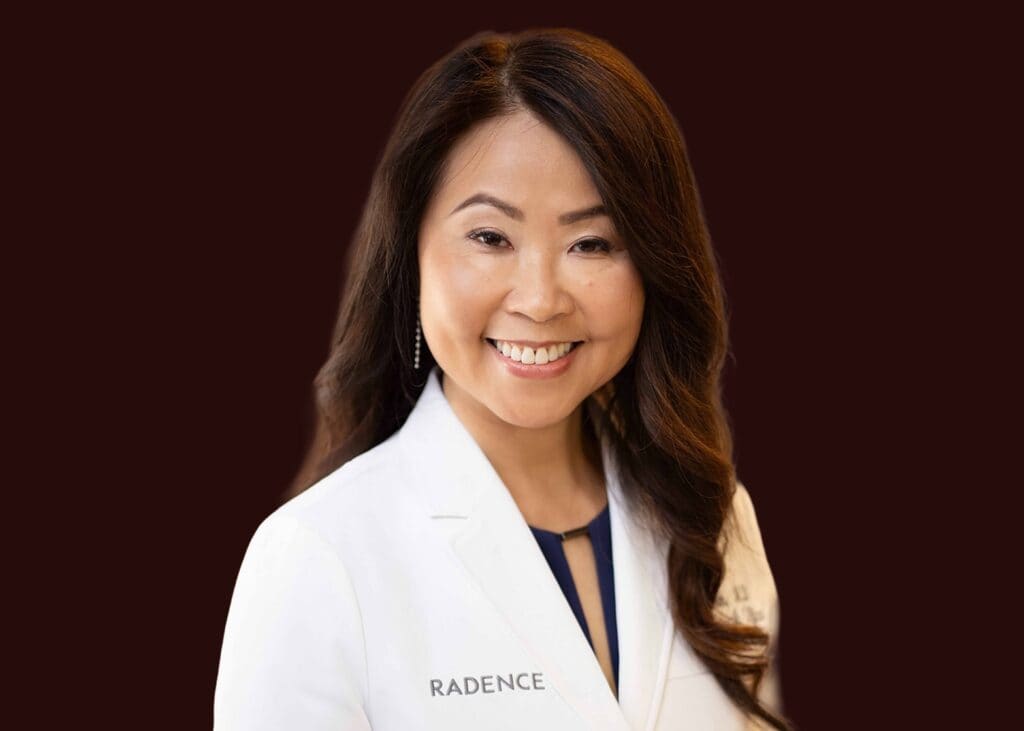
In today’s rapidly evolving medical landscape, physicians are increasingly called upon to balance innovation with evidence, patient expectations with system constraints, and emerging tools with deeply rooted traditions. For Dr. Julie Chen — a leader in genomic precision medicine, board-certified in internal medicine, and fellowship-trained in integrative medicine — that means reclaiming what medicine was always meant to be: comprehensive, compassionate, and grounded in science.

“We all went into medicine to help people heal,” said Dr. Chen. “But many of us find ourselves navigating systems that are optimized for disease management, not for prevention. That isn’t a personal failing. It’s a systems problem.”

Dr. Chen currently serves as Chief Medical Officer at Radence, a company pioneering a multimodal precision-based model of care. At its core, Radence seeks to identify and intervene on disease risk earlier than traditional models allow — not in response to pathology, but in anticipation of it.

“Most of what we see in chronic disease is not sudden,” Dr. Chen said. “It’s a long, progressive breakdown of physiologic resilience. Our job is to understand that trajectory and to act on it early, when the patient still feels ‘fine,’ but the biology is already shifting.”

Addressing the Limits of Traditional Care

Dr. Chen has tremendous respect for the goals of current conventional medicine. However, she sees it as incomplete.

“Our traditional system is remarkable at acute intervention,” she said. “But it’s less equipped to manage early disease interception of the slow-developing dysfunctions that characterize so many of our biggest health challenges — cancer, cardiovascular disease, neurodegeneration, metabolic dysfunction.”

She points to constraints many physicians know well: 15-minute visits, fragmented specialty care, limited tools for subclinical disease, and a reactive rather than predictive infrastructure.

“It’s not that doctors don’t care about prevention or early detection,” Dr. Chen said. “It’s that the system doesn’t always give them the time or tools to do it well.”

A Multimodal, Systems-Oriented Approach

What Radence offers is a framework to augment what clinicians are already doing. Its platform brings together genomics, imaging, metabolomics, advanced blood work, and wearable data to generate a comprehensive picture of an individual’s health trajectory.

“We use high-resolution tools to pick up signals that traditional workups might miss. But more importantly, we translate those findings into real-world decisions. We help people understand their risk and take steps to modify it,” Dr. Chen said.

That process is deeply collaborative. Radence doesn’t seek to replace a patient’s care team. It works in partnership with referring clinicians, offering extended assessments and evidence-based recommendations that complement existing care plans.

“This is not about displacing primary care or specialists. It’s about supporting them with another layer of data and insight,” Dr. Chen said. “We know that no one understands the patient better than their own doctor. Our role is to enhance that relationship, not compete with it.”

Precision without Elitism

One concern often raised about precision or concierge medicine is equity—that these models only serve the affluent. Dr. Chen sees this differently.

“Early adopters always pave the way for broader access,” Dr. Chen said. “Every major medical advance — from medications to whole-genome sequencing — started in specialized settings before becoming standard. What we’re building now will eventually become more scalable. But someone has to lead, and that’s where Radence comes in.”

To that end, the company is investing in outcomes research, clinical validation, and real-world evidence to support its protocols. “We’re not just innovating,” she said. “We’re validating. We’re contributing to the science so this model can expand.”

Data Alone is Not Enough

Despite Radence’s technological sophistication, Dr. Chen emphasizes that data is only as powerful as the context it’s given.

“We’re not just handing people dashboards,” she said. “We’re walking them through it. We pair high-resolution diagnostics with meaningful conversation. That’s where trust is built. That’s how change happens.”

The result is more than early detection testing. It’s engagement.

“When patients understand their physiology, when they see the why behind a recommendation, they are more likely to act,” Dr. Chen said. “We’re not just changing lab values. We’re changing behavior.”

Four Disease Domains, One Coordinated Strategy

Radence begins by focusing on the survival layer — the four disease categories responsible for the majority of premature mortality and morbidity: cancer, cardiovascular disease, metabolic dysfunction, and neurodegeneration. These are not isolated silos, Dr. Chen noted. They are deeply interconnected through shared pathways of inflammation, oxidative stress, metabolic regulation, and genetic risk.

“If you have insulin resistance, you’re not just at risk for diabetes. You’re at increased risk for dementia and cardiovascular disease,” she said. “We take a systems-level view of risk. That means we can intervene in ways that impact multiple domains simultaneously.”

From there, the platform expands to assess autoimmune risks, hormone regulation, immune function, and more.

“We meet the patient where they are, and then we grow with them,” Dr. Chen said. “It’s dynamic. It’s continuous. And it’s deeply personal.”

An Invitation to the Medical Community

For Dr. Chen, one of the most innovative aspects of Radence is the partnership.

“We want to work with clinicians who are curious, collaborative, and committed to pushing the standard of care forward,” Dr. Chen said. “Whether you’re a cardiologist, internist, neurologist, or family physician, there’s a place for you in this model. We need your insight. Your experience. Your trust.”

She knows that change is never easy, especially in a field as high-stakes and evidence-driven as medicine. But she also knows that physicians are problem-solvers.

“We’re not asking people to abandon conventional care,” Dr. Chen said. “We’re inviting them to build on it. To extend it. To make it better.”

In an era where both patients and clinicians are demanding more — more answers, more support, more continuity, Dr. Chen sees Radence as a blueprint for what’s possible.

“This is the future of care: science-led, system-aware, patient-centered, and clinician-empowering,” Dr. Chen said. “We’re not starting over. We’re starting ahead.”